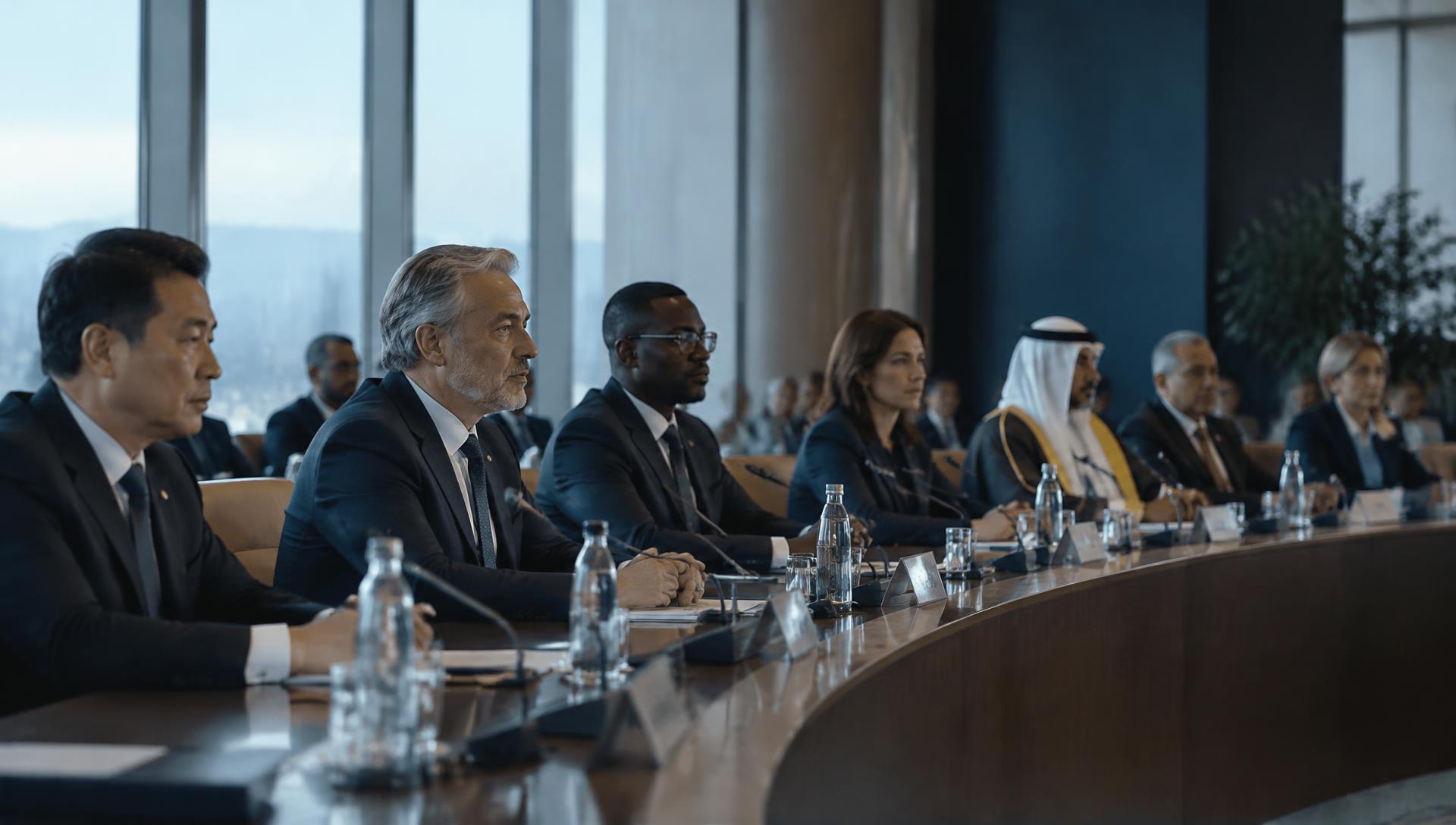
Editorial analysis, commissioned for this website with AI assistance. Recommendations are not adopted SPAG or UN policy. The cover is an existing illustrative image, not documentary evidence of a SPAG event. Sources checked on 25 October 2026.
Introduction
International policing depends on more than the availability of personnel. It requires shared understanding between institutions with different responsibilities, legal traditions and operational experience. Member State Police Advisers can help build that understanding by explaining national capabilities, interpreting international priorities and maintaining professional relationships across institutional boundaries. Their strategic contribution lies in making dialogue more informed, not in replacing the authority of national services or United Nations entities. For the Strategic Police Advisory Group, this provides a useful starting point for considering how a professional advisory forum can add value. The central argument is that advisers are most effective when they connect experience to a clearly defined institutional question, distinguish evidence from preference and explain what practical cooperation could achieve.
Connecting distinct institutional responsibilities
A Member State Police Adviser and the UN Police Adviser are not interchangeable roles. The latter heads the UN Police Division; Member State advisers bring national perspectives to international engagement. The Division develops policy and guidance, provides technical advice and supports personnel processes. Understanding these responsibilities helps advisers address questions to the appropriate institution rather than treating every policing issue as a matter for the same decision-maker.
Useful advice identifies the decision under discussion, the authority responsible for it and the limits of the available evidence. An adviser might explain a national training approach without suggesting that it is suitable everywhere. Equally, a concern about deployment preparation should be distinguished from a request to change a mission mandate. This discipline preserves both institutional accountability and the credibility of professional contributions.
Turning national experience into shared learning
National police services hold valuable knowledge about leadership, organisational development and public accountability. However, experience does not travel automatically. Legal powers, resources and relationships with communities differ. An approach that works in one service may depend on conditions absent elsewhere. Advisers therefore need to explain not only what was done, but why it was appropriate and what would constrain adaptation.
A concise contribution can separate the original problem, the response, the evidence of its effects and the conditions for transfer. It should acknowledge weaknesses as well as strengths. This makes national experience useful to colleagues without presenting it as a universal template or an independently evaluated success. Professional dialogue becomes more productive when participants can interrogate assumptions rather than simply exchange descriptions.
Supporting coherent national contributions
Strategic coordination involves connecting international discussions with the national institutions that prepare and support contributions. Advisers can clarify the difference between a broad expression of interest and a capability that is genuinely available. They can also help relevant colleagues understand why particular expertise, preparation or continuity may matter to an international policing task.
This does not confer recruitment authority or create a new deployment procedure. It is a communication function. Clear records of questions, responsible counterparts and agreed follow-up reduce the risk that informal discussion is mistaken for a commitment. A shared understanding of constraints is often more useful than an ambitious proposal whose staffing, resources or national approval requirements remain unexplained.
Contributing to international frameworks
The UN Strategic Guidance Framework illustrates the importance of consultation between Member States and the Department of Peace Operations. Its purpose includes improving consistency in international policing while supporting host-State police services. Advisers can contribute to such discussions by identifying ambiguity, explaining implementation challenges and bringing relevant professional experience to the attention of the appropriate institutions.
Their contribution should remain traceable. A proposed revision is not adopted guidance; a consultation is not approval. Keeping these distinctions visible allows a professional forum to explore options honestly. It also helps participants distinguish a shared concern from genuine consensus and understand when additional legal, policy or field expertise is needed before advice can responsibly be advanced.
Practical implications for SPAG and its members
The supplied SPAG website brief describes strategic dialogue, coordination, operational learning and advisory engagement with UNPD. These themes give the analysis a clear connection to the purpose presented on this website. The complete Terms of Reference was not supplied for this article, so this relationship is based on the brief rather than a verified reading of the governing document.
As analytical suggestions, advisers could prepare short issue notes, identify the intended recipient of recommendations and record unresolved questions. They could distinguish national observations from collectively discussed outputs and ensure that colleagues can find the reasoning behind a proposal. These practices would support mutual understanding while preserving the difference between a professional contribution and an authorised institutional position.
Key takeaways
Strategic value comes from connecting experience to a defined institutional question.
Member State Police Advisers and the UN Police Adviser have distinct responsibilities.
National approaches require context before they can inform international practice.
Consultation and recommendations should never be presented as adopted policy.
Conclusion
Police Advisers can strengthen international cooperation by making relationships more informed and institutional choices clearer. Their influence depends less on the volume of information exchanged than on its relevance, limitations and practical interpretation. A credible advisory forum can help turn diverse national perspectives into useful questions and proportionate recommendations, while leaving decisions with the institutions that hold the relevant authority.
Sources and further reading
UN Police Division — United Nations Police; undated institutional page
UN Police Adviser — United Nations Police; undated institutional page
Strategic Guidance Framework — United Nations Police; undated overview